
Mission Statement
We support grassroots nonviolent activism for the liberation of all.
Our Programs
Four programs comprise the bulk of the Muste Foundation’s support to grassroots activist organizations engaged in nonviolent action for social justice:
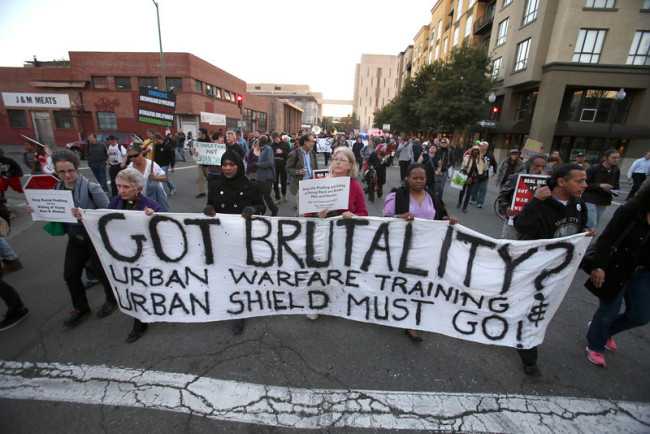
Organizing Grants
The Foundation’s primary grantmaking program funds grassroots activist projects in the US and around the world, prioritizing those with small budgets and little access to mainstream funding. A rotating council of current and past board members, with volunteers from our SJF grantee community, screens applications. They bring a wide range of organizing experience and diverse political perspectives to the process.
Fiscal Sponsorships
By serving as a fiscal sponsor, the Foundation helps organizations receive tax-deductible contributions for the educational component of their work. This is particularly helpful to organizations that don’t have the time, staff or financial resources to pursue and maintain tax-exempt status.
Publications
The Foundation publishes a pamphlet series of historical and contemporary essays on issues of social change. Topics include nonviolent resistance and national defense, liberation struggles, racism, sexism, and labor organizing. These pamphlets are distributed to activist groups, schools and colleges, and individuals.
A Life of Activism
Who is A.J. Muste?
Abraham Johannes Muste (1885–1967) was one of the most remarkable activists of the 20th century, though he remained largely unknown to the general public.
Born in Holland and raised in a strict Calvinist household in Michigan, he was ordained a Dutch Reformed minister in 1909. A gifted scholar and athlete, he seemed destined for a conventional life in the church. Instead, inspired by Socialist candidate Eugene Debs and Quaker pacifism, he left the pulpit to throw himself into labor struggles, civil liberties work, and eventually leadership of striking textile workers in Lawrence, Massachusetts.
By the 1920s Muste was a respected and controversial labor organizer, directing Brookwood Labor College and helping form the Conference for Progressive Labor Action. The Great Depression pushed him further left, and he briefly abandoned pacifism for Marxism, leading the American Workers Party and playing a key role in the sit-down strikes of the 1930s. Yet after a 1936 trip to Europe and a meeting with Leon Trotsky, he returned to the U.S. transformed once more into a Christian pacifist, a commitment that would define the rest of his life.
As head of the Fellowship of Reconciliation from 1940 to 1953, Muste defended conscientious objectors during World War II, stood against McCarthy-era repression, and helped launch the Congress of Racial Equality (CORE), one of the first militant civil rights groups. He was widely regarded as a brilliant strategist and prophetic thinker, though he preferred direct relationships and grassroots work over public recognition.
Muste’s so-called retirement only deepened his activism. He led dramatic protests against nuclear weapons, from trespassing at test sites to sending peace crews into the Pacific. He supported African independence leaders like Kenneth Kaunda and Julius Nyerere, mentored Martin Luther King Jr. and Coretta Scott King, and inspired pacifists who walked from San Francisco to Moscow with a message of unilateral disarmament.
The Vietnam War marked his final chapter. Trusted across political factions, Muste became the unifying figure of the antiwar movement. In 1966 he traveled to Saigon, where he was arrested, and then to Hanoi to meet with Ho Chi Minh. Weeks later, he died suddenly in New York. Condolences arrived from both Robert Kennedy and Ho Chi Minh—an extraordinary testament to his influence. Muste’s life embodied the unresolved tension between pacifism and social justice, but he never stopped trying to reconcile the two.